iOS First or Android First? The Right Launch Strategy for Jordan & MENA Apps
Deciding between iOS and Android for your initial launch in Jordan and the MENA region is a critical business decision. This guide analyzes market share, revenue potential, and user behavior to help you choose.
Aviniti Team
Published on March 25, 2026
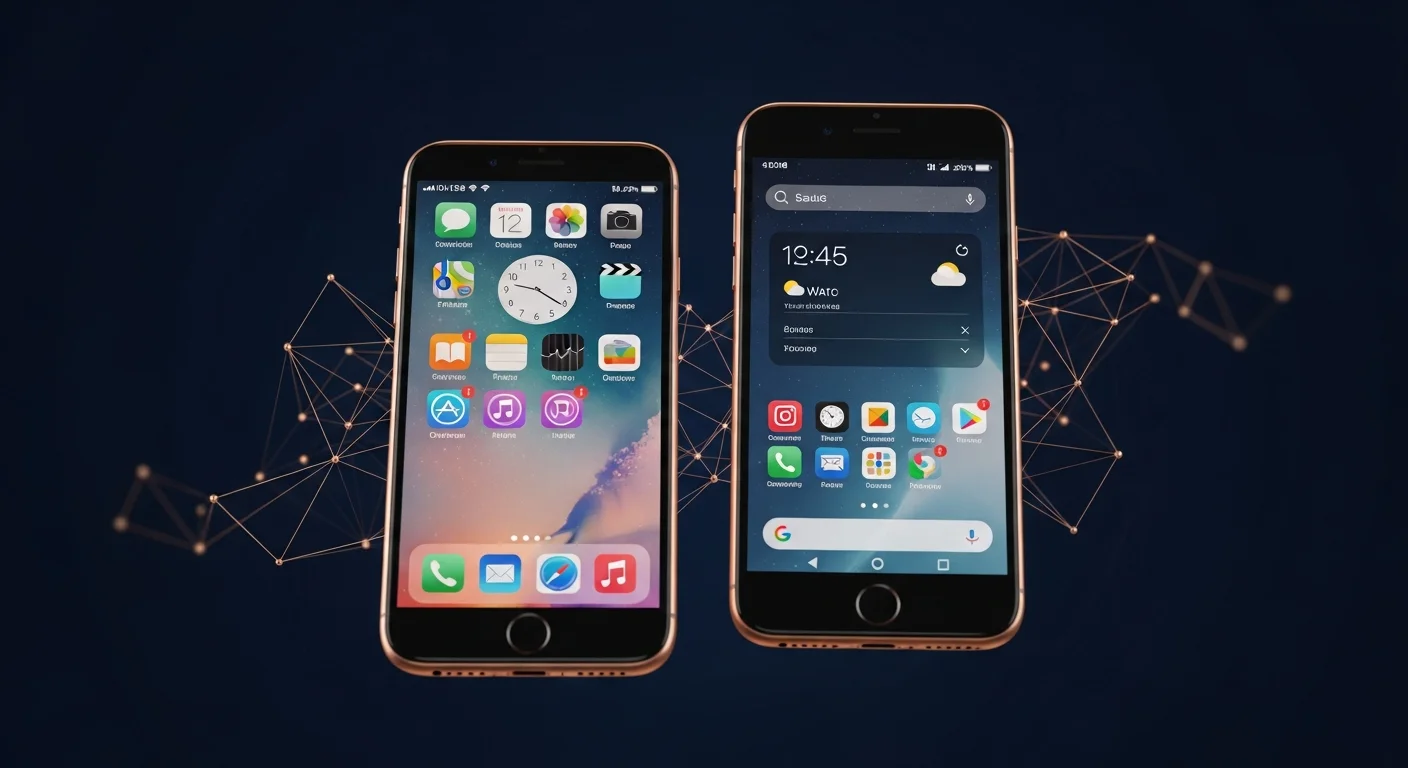
iOS First or Android First? The Right Launch Strategy for Jordan & MENA Apps
For entrepreneurs and business owners in Amman and across the MENA region, the question is rarely "Should we build an app?" but rather "Where do we start?" In a market as diverse as the Middle East, choosing between an iOS vs android first jordan app launch can determine your initial traction, burn rate, and ultimate success.
At Aviniti, we help businesses navigate these technical crossroads every day. While the global debate often favors iOS for revenue and Android for reach, the nuances of the Jordanian and regional markets require a more localized perspective.
Understanding the Landscape: Jordan and the MENA Region
The choice of platform is not just a technical preference; it is a demographic and geographic strategy. In Jordan, the split between Android and iOS is starkly defined by purchasing power and location.
The Android Dominance in Volume
In Jordan, Android remains the king of market share. Current data suggests that approximately 75% to 80% of mobile users in the Kingdom utilize Android devices. This is largely driven by the availability of budget-friendly devices from brands like Samsung, Xiaomi, and Huawei. If your business model relies on mass-market adoption—such as a high-volume food delivery service or a public utility app—ignoring Android first could mean missing out on 80% of your potential customers.
The iOS Stronghold in Value
Conversely, iOS users in Jordan, while smaller in number (roughly 20-25%), represent a high-value segment. These users are typically concentrated in West Amman and among high-income professionals. More importantly, if your expansion plan includes the GCC (Saudi Arabia, UAE, Qatar), the iOS share jumps significantly, often reaching 40-50% of the market. iOS users globally, and specifically in the MENA region, demonstrate a higher "Propensity to Pay" for in-app purchases and premium services.
The Comparison: iOS vs. Android in MENA
| Feature | Android (Jordan/MENA) | iOS (Jordan/MENA) |
|---|---|---|
| Market Share (Jordan) | ~78% | ~22% |
| Market Share (GCC) | ~55% | ~45% |
| User Spending Power | Moderate | High |
| Development Complexity | Higher (Device Fragmentation) | Lower (Standardized Hardware) |
| App Store Approval | Faster (usually) | Stricter/Slower |
| Cost per Acquisition | Generally Lower | Generally Higher |
When to Choose Android First
Launching on Android first is often the right move for Jordanian startups targeting the general population. Here is why:
- Mass Market Reach: If you are launching a service like a neighborhood grocery delivery or a community-based app, you need volume. Android provides that volume.
- Beta Testing at Scale: Because of the larger user base, you can gather more data on user behavior and bugs quickly.
- Flexibility: The Google Play Store traditionally allows for faster updates and fewer restrictions on certain types of integrations, which is helpful during the rapid iteration phase.
When to Choose iOS First
Despite the smaller market share in Jordan, starting with iOS is a strategic masterstroke for specific business models:
- Premium Services: If you are building a luxury salon booking app, a high-end clinic management system, or a niche e-commerce platform for luxury goods, your target audience is likely on iOS.
- GCC Expansion Strategy: If your goal is to validate in Amman but move quickly into Riyadh or Dubai, iOS is non-negotiable. The purchasing power of the iPhone user base in the Gulf is among the highest in the world.
- Lower Development Costs (Initially): Developing for iOS is often faster because developers don't have to account for the thousands of different screen sizes and hardware specifications found in the Android ecosystem.
The Third Path: Cross-Platform Development
At Aviniti, we often recommend a third option for modern startups: Cross-Platform Development using frameworks like Flutter or React Native. This allows you to build one codebase that runs on both iOS and Android simultaneously.
This approach effectively eliminates the "which first" dilemma, allowing you to capture 100% of the market from day one without doubling your budget. However, for highly complex AI-driven apps or those requiring deep hardware integration, a native-first approach might still be necessary.
Decision Framework: A 5-Step Guide
To decide on your iOS vs android first jordan app launch strategy, ask yourself these five questions:
- Who is my user? (High-income/West Amman/GCC vs. Mass Market/Nationwide).
- What is my monetization model? (Ads/Volume vs. Subscriptions/High-ticket sales).
- What is my budget? (Limited budget for one platform vs. Budget for cross-platform).
- What is the complexity? (Simple CRUD app vs. Complex AI/AR features).
- What is the timeline? (Need to launch in 4 weeks vs. 4 months).
Using tools like the Aviniti AI Analyzer can help you process these variables against current market data to find the most cost-effective path.
How Aviniti Can Help
Choosing the platform is just the beginning. At Aviniti, we combine AI-powered insights with expert development to ensure your app doesn't just launch, but thrives. Whether you need an AI Estimate for your project or want to validate your business model in our Idea Lab, we provide the technical foundation for your Jordanian success story.
Frequently Asked Questions (FAQ)
1. Is it more expensive to develop for Android or iOS? Generally, Android development can be 20-30% more time-consuming due to the need to test on many different devices (fragmentation), which can lead to higher costs if building natively.
2. Can I switch from one to the other later? Yes, but if you build natively, you will essentially be starting a new project for the second platform. This is why many startups now choose cross-platform tools like Flutter.
3. Which platform has better security? iOS is often perceived as more secure due to its "walled garden" approach, but modern Android development (especially on newer versions) offers robust security features suitable for fintech and healthcare.
4. How long does it take to get on the App Store vs. Google Play? Google Play usually approves apps within hours or a couple of days. Apple’s App Store has a more rigorous manual review process that can take anywhere from 24 hours to a week.
Ready to build?
Don't guess your development costs. Get an instant, AI-driven breakdown of your project requirements today.
Not sure if your idea is ready for the market? Use our AI tools to analyze your niche.